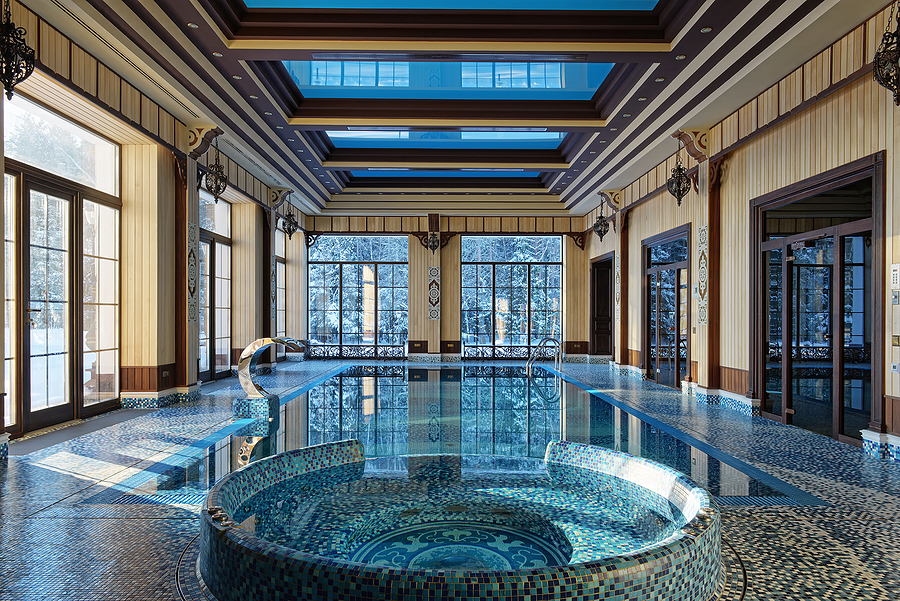
Indoor pools create a unique and luxurious environment and experience, whether they’re part of a private residence, fitness center, hotel, or rehabilitation facility. However, behind the visual appeal and year-round usability comes a major technical challenge: managing heat, moisture, and air circulation. Few building components are more critical to that balance than the windows.
Standard window systems are rarely designed to withstand the extreme conditions created by indoor pools. Constant humidity, warm air, chemical exposure, and condensation can quickly lead to corrosion, fogging, mold growth, and structural damage. That’s why replacement windows for indoor pools require a specialized approach. When designed correctly, indoor pool window systems help control moisture, improve ventilation, protect the building envelope, and maintain long-term performance.
Why Indoor Pools Create a Demanding Environment
Indoor pool spaces operate under conditions that are far more aggressive than typical residential or commercial interiors. Warm water continuously evaporates, filling the air with moisture. Without proper control, that moisture seeks out cooler surfaces, including windows, frames, and surrounding walls.
Over time, this leads to condensation buildup, frame deterioration, seal failure, and even hidden structural damage. Chlorine or salt systems can further accelerate corrosion if window materials are not carefully selected. These factors make window performance a critical part of indoor pool design and renovation.
When older or standard windows begin to fail in a pool environment, replacement isn’t optional. It becomes essential to protect both the space and the structure.
The Role of Replacement Windows in Ventilation and Humidity Control
Windows play a dual role in indoor pool spaces. They contribute to ventilation by supporting airflow strategies, and they act as a barrier against moisture infiltration when closed. Achieving that balance requires precision engineering and materials designed specifically for high-humidity environments.
High-quality replacement windows for indoor pools are built to resist moisture penetration, maintain airtight seals, and support mechanical ventilation systems. Proper glazing, frame construction, and installation all work together to reduce condensation and prevent warm, humid air from reaching colder structural surfaces.
When windows fail to perform this role, moisture problems escalate quickly. Replacing them with purpose-built systems can dramatically improve air quality and long-term durability.
Why Custom Solutions Matter for Indoor Pool Windows
No two indoor pool environments are exactly the same. Ceiling height, pool size, ventilation strategy, climate, and building orientation all influence how moisture behaves within the space. Because of this, off-the-shelf window systems often fall short.
Custom indoor pool window systems allow for precise control over performance characteristics. Window sizing, frame materials, glazing composition, and opening configurations can all be tailored to meet the specific demands of the space. This customization ensures that windows work with the building’s HVAC and dehumidification systems rather than against them.
Custom replacement windows also accommodate non-standard openings often found in natatoriums and older buildings, ensuring proper fit and sealing.
Condensation Control Starts With the Right Window Design
Condensation is one of the most visible and damaging issues in indoor pool environments. When warm, humid air contacts cooler glass surfaces, water forms almost immediately. If left unmanaged, this moisture can drip into wall cavities, damage finishes, and promote mold growth.
Modern replacement windows combat condensation through advanced glazing systems. Insulated glass units with thermal breaks help keep interior glass surfaces warmer, reducing the likelihood of condensation forming. Proper edge sealing and spacer systems further prevent moisture intrusion into the glass unit itself.
Frame design is just as important. Materials that resist corrosion and incorporate thermal breaks prevent cold transfer and reduce condensation around window perimeters.
Ventilation Support Without Sacrificing Performance
While indoor pools rely heavily on mechanical ventilation, windows still play a supporting role in airflow management. In some designs, operable windows are incorporated to assist with natural ventilation during specific conditions.
Custom replacement windows can be engineered to open safely and securely without compromising airtightness when closed. This flexibility allows building operators to adapt ventilation strategies seasonally while maintaining humidity control during peak use.
The key is precision. Poorly designed operable windows can create air leaks that worsen humidity problems instead of solving them.
Durability in a Chemically Active Environment
Indoor pools introduce more than just moisture. Chlorine, bromine, or salt systems release chemicals into the air that can corrode standard window materials over time. Frames, hardware, and fasteners must be selected with these conditions in mind.
High-performance replacement windows for indoor pools use materials and finishes that resist corrosion and chemical exposure. This improves longevity and reduces maintenance costs, especially in commercial or high-use facilities.
Durability is not just about avoiding visible damage. It’s about preserving seals, maintaining structural integrity, and preventing performance degradation year after year.
Energy Efficiency and Comfort
Indoor pools are energy-intensive spaces. Heating water, controlling air temperature, and managing humidity all place demands on mechanical systems. Poorly performing windows add unnecessary strain by allowing heat loss or unwanted moisture transfer.
Custom indoor pool window systems improve energy efficiency by maintaining consistent interior surface temperatures and reducing air leakage. This helps HVAC and dehumidification systems operate more efficiently, improving comfort while lowering operating costs.
For facilities that operate year-round, these efficiency gains add up quickly.
Common Signs It’s Time to Replace Indoor Pool Windows
- Persistent condensation on glass or frames
- Fogging between glass panes
- Corrosion or deterioration of frames and hardware
- Visible mold or water damage around window openings
These issues are often symptoms of deeper performance failures. Replacing windows early can prevent costly structural repairs later.
Why Experience Matters in Indoor Pool Window Replacement
Replacing windows in an indoor pool environment requires specialized knowledge. Improper installation, incorrect material selection, or poor integration with ventilation systems can worsen moisture problems instead of solving them.
SEMKO, Inc. brings experience in designing and manufacturing custom window solutions for demanding environments. Their approach to indoor pool window systems focuses on performance, precision, and long-term durability. By tailoring replacement windows to the specific conditions of each project, SEMKO helps clients achieve reliable humidity control and ventilation balance.
Learn More About Custom Indoor Pool Window Solutions
Indoor pools offer tremendous value, but they also demand careful building design. Windows play a critical role in controlling humidity, supporting ventilation, and protecting the structure from moisture damage. Generic solutions rarely work in these environments.
With custom replacement windows for indoor pools, property owners can address condensation, improve energy efficiency, and extend the life of the building envelope. Thoughtfully designed indoor pool window systems don’t just solve problems; they create healthier, more comfortable spaces built to last.
If you’re planning an upgrade or renovation for an indoor pool facility, SEMKO, Inc. can help design replacement windows built for high-humidity environments. Contact us to learn more about custom window systems engineered for performance, durability, and long-term success.