
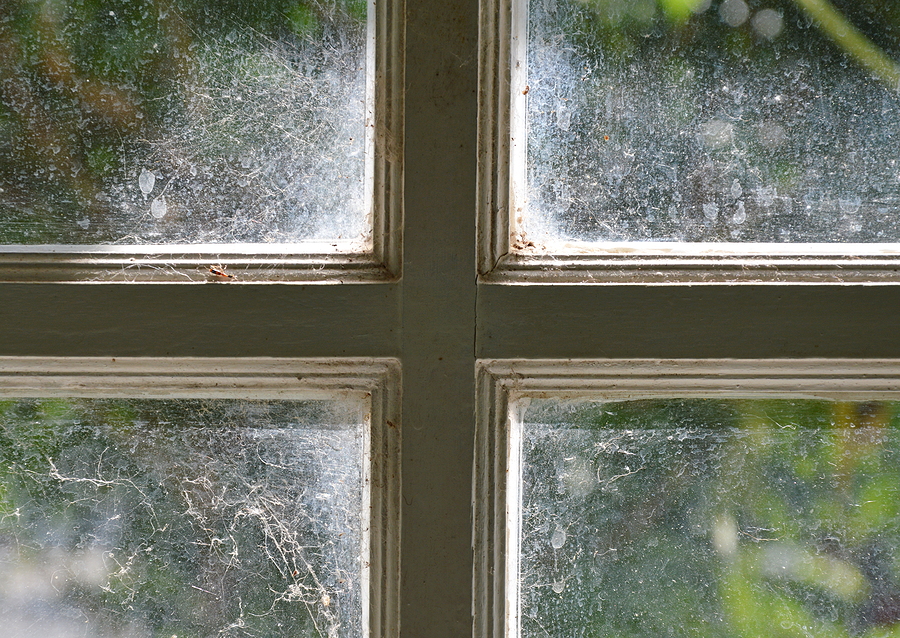
You’ve washed the window, dried it, and gone back over the same spot. The streaks are gone, but those cloudy little circles haven’t budged. Can hard water stains or mineral deposits be removed from windows?
Often, they can. Minerals sitting on the surface may come off with a suitable cleaner, although older buildup can take more work than ordinary dirt. The difficulty is figuring out whether you’re looking at removable residue, damage to the glass, or cloudiness somewhere you can’t reach.
Scrubbing harder isn’t the answer.
Why Those Spots Keep Showing Up
Hard water contains dissolved minerals, including calcium and magnesium. When droplets dry on a window, the water evaporates and leaves some of those minerals behind. Repeated wetting and drying can gradually build a stubborn film.
A sprinkler aimed at the house is a common culprit. So is rinsing windows with a garden hose and leaving them to dry in the sun. You may notice that the windows beside a flower bed look worse than the ones across the front porch, even though you cleaned them all together.
Look at the pattern. Spots concentrated where water regularly splashes can give you a useful clue about the source.
And until that source changes, the marks may return after cleaning.
Start With the Window’s Care Instructions
Before trying a stain remover, check the cleaning guidance for your particular windows. Glass can have exposed coatings or applied films that need different care from ordinary uncoated glass.
That matters more than the cleaning tip on the bottle.
A product labeled for bathroom mineral deposits isn’t automatically suitable for your windows. It may affect the glass treatment, surrounding finish, or other components. If you don’t know what kind of glass you have, ask the manufacturer before using a stronger cleaner.
Begin by removing loose dirt with an approved gentle cleaning method and a clean, soft cloth. Grit caught under the cloth can scratch the surface while you’re concentrating on a water spot.
Will Vinegar Remove Hard Water Stains?
A diluted white vinegar solution can help loosen some mineral deposits, and certain window manufacturers include vinegar-based solutions in their cleaning guidance. But the approved dilution and method should come from the instructions for your windows.
Try a small area first.
Work on cool glass out of direct sunlight so the solution doesn’t dry before you can remove it. Use a soft, lint-free cloth, follow the recommended cleaning procedure, and remove the solution thoroughly. Keep runoff from lingering on nearby finishes.
Then let the glass dry and check it again. Wet glass can look clearer than it actually is, so judging the result while the surface is still damp can be misleading.
If the spots have improved, you may be dealing with removable buildup. If nothing changes, don’t keep increasing the strength of the mixture. And never mix vinegar with bleach or combine cleaning products.
Leave the Scraper in the Toolbox
A raised mineral spot can make scraping seem reasonable. You can feel something on the glass, so why not shave it off?
Because a blade can leave damage behind.
Avoid razor blades, abrasive pads, and scouring powders unless the window manufacturer specifically approves the method for that product. Online suggestions involving steel wool or polishing compounds may overlook coatings and other details about your glass.
The same caution applies to powered polishing. Removing a mark is little comfort if the process leaves scratches or changes how the glass looks.
For buildup that won’t respond to approved household cleaning, an experienced glass-cleaning professional can assess whether further treatment is appropriate. Tell them about any coatings or films before work begins.
Sometimes the Mark Isn’t a Deposit Anymore
Surface residue and damaged glass can look surprisingly similar from across a room. Long-standing staining may be accompanied by etching, which is a change in the glass surface itself.
A cleaner can remove material resting on glass. It can’t simply wash away an etched area.
That doesn’t mean one unsuccessful cleaning attempt proves you need new windows. Stubborn deposits, scratches, and coating damage can all require a closer look. Have the condition identified before spending money on repeated treatments or replacement.
There’s another possibility, too: the haze may be between the panes.
If both accessible surfaces are clean but the cloudy area remains inside a double-pane window, cleaning the outside won’t reach it. Moisture between panes can indicate a failed insulated-glass seal. Depending on the window, you may be able to replace the glass unit without replacing the entire frame.
Keep the Water Off the Glass
Once the window is clean, check the sprinkler coverage and adjust any spray that reaches the house. After washing, remove the rinse water instead of letting droplets dry in place.
Small changes can help.
Can hard water stains or mineral deposits be removed from windows? Many surface deposits can, provided the cleaning method suits the glass. Persistent haze deserves an assessment before you try anything more aggressive.
If damaged or aging windows have you considering replacement, Semko, Inc. serves homeowners throughout the Chicago area. Contact Semko, Inc. to discuss replacement window options for your home.